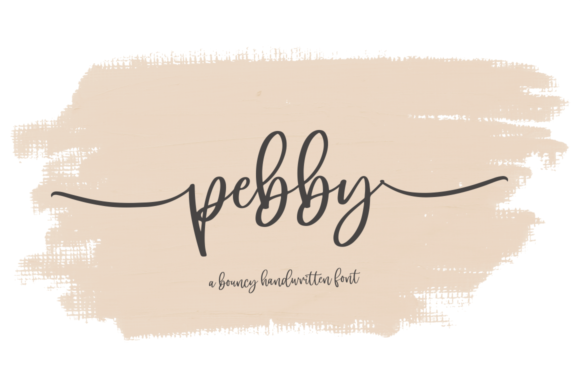
Pebby: A Handwritten Font for Authentic Design
There’s a specific kind of warmth that only a handwritten style can bring to a design. It’s the feeling of a personal note, a quick sketch, or a friendly message. In a world saturated with clean, geometric sans serif fonts and classic serifs, a font like Pebby offers a refreshing alternative. It’s a premium font that captures a sweet, lively, and authentic handwritten aesthetic, designed to inject personality and life into your creative work.
More Than Just Pretty Letters
At its core, Pebby is a display font, meaning it’s crafted to make a statement in headlines, logos, and prominent text rather than being used for long paragraphs of body copy. Its character is defined by fluid, slightly irregular strokes that mimic the natural movement of a pen or brush. This isn’t a rigid or overly perfect script; it has an organic quality that feels approachable and genuine. The overall appeal lies in its ability to be both charming and versatile, striking a balance between playful whimsy and clean readability.
What truly elevates this typeface is its extensive set of alternate characters and swashes. This is where the PUA encoding mentioned in its description becomes a practical superpower. PUA (Private Use Area) encoding ensures that every stylistic glyph—from a decorative swoosh on a capital letter to a unique tail on a lowercase 'y'—is easily accessible in any design software. You don’t need to be a typographer to explore the full creative potential of the font. This feature transforms Pebby from a simple script font into a comprehensive design asset kit.
Finding the Perfect Home for Pebby
The true test of any creative font is where and how you use it. Pebby excels in projects where human connection and personality are key. Think about the first impression of a brand. For a logo design, this font can instantly communicate a brand’s friendly, artisanal, or approachable nature. A boutique bakery, a personal coach, a handmade jewelry shop, or a lifestyle blog could build a powerful brand identity around the warmth Pebby provides.
Beyond logos, its applications are vast:
- Marketing & Social Media: It’s a fantastic tool for creating eye-catching social media graphics. Use it for quotes, promotional announcements, or call-to-action text to stop the scroll and create a personal connection. Its style works beautifully for Instagram stories, Pinterest pins, and Facebook ads.
- Packaging & Product Design: Imagine this font on a craft coffee bag, a scented candle label, or artisan chocolate packaging. It adds a tactile, handmade feel that can elevate the perceived value of a product.
- Editorial & Publishing: In editorial design, Pebby can shine in magazine pull quotes, chapter titles, or stylized headers in a cookbook. It breaks the monotony of standard body text and draws the reader’s eye to key moments.
- Digital & Web Design: When used thoughtfully in web design, it can bring warmth to hero sections, button labels, or special feature callouts. It pairs exceptionally well with a clean, neutral sans serif font or a classic serif font for body text, creating a dynamic and readable hierarchy.
- Personal & Commercial Projects: For crafters and hobbyists, it’s perfect for creating custom invitations, greeting cards, wedding stationery, or personalized gifts. For entrepreneurs, it’s a valuable tool for building a cohesive and memorable brand.
Practical Guidance for Using a Handwritten Font
Integrating a distinct font like Pebby into your toolkit requires a bit of strategy. Here’s how to use it effectively.
First, always test for readability. While beautiful, handwritten fonts can become difficult to read if used too small or in long strings of text. The general rule is to reserve them for headlines, short phrases, and accent text. Pair it with a highly legible body font. A common and effective combination is a handwritten font like Pebby with a geometric sans serif font like Montserrat or Open Sans. The contrast in styles creates a clear visual hierarchy and ensures your message is both beautiful and accessible.
Second, explore the full character set. Before finalizing a design, take time to look at all the alternate letters and swashes available. A simple swap of a standard ‘a’ for a stylistic one can completely change the feel of a word. This is especially important for logo design or headline text where every detail matters.
Third, consider the context and audience. Does the font’s personality align with your project’s goals? For a serious financial report, it’s likely not the right fit. But for a children’s book cover, a wellness brand, or a creative portfolio, its sweet and lively style could be perfect. The key is alignment between the font’s character and the message you want to convey.
Finally, be mindful of licensing. Pebby is a commercial font, meaning it’s a professional-grade asset designed for use in commercial projects, from client work to products for sale. Always review the license agreement to understand the terms, which typically cover the number of users or computers and whether it can be embedded in apps or digital products. Using licensed fonts ensures you have the legal right to use the work and supports the type designers who create these valuable tools.
In the end, choosing a font is a creative decision that impacts how your work is perceived. Pebby offers a specific and valuable slice of modern typography